
INSIGHTS
Optimising mining and resource corporate travel programs
In the resource industry, movement is a given. When you’ve got fly-in, fly-out (FIFO) crews, international specialists, charter flights, and remote site rosters to manage, your travel program becomes a critical function of your business.
So, what do high-functioning corporate travel programs entail for this sector? We spoke with Danni, FCM
Travel Global Account Manager, who specialises in managing corporate travel programs for mining, oil, and gas companies. She’s helped optimise massive global travel programs and knows what makes (and breaks) them.
Make travel a core operational pillar
Travel is often an enabler of operations in this industry. As a result, when it goes wrong, the fallout isn't limited to one delayed traveller. It can throw off entire rosters, site productivity, and project timelines.
Mining companies plan months in advance for crew rotations, says Danni. So, if there's a delay, cancellation, or adverse event, the knock-on effect is significant and isn’t just isolated to one person. The whole operation can suffer.
The complexity ramps up even further when dealing with multiple sectors, like connecting with ground transportation and helicopters in offshore oil and gas. One missed connection can mean a chain reaction of missed handovers, costly downtime, and frustrated crews stuck in limbo.
With all these risk factors, it’s vital to consider corporate travel requirements well in advance during project planning.
When mining companies open new sites and increase operations, I encourage my clients to integrate travel into their planning, such as how their preferred airline is going to service the route or the new frequency levels, or securing accommodation well in advance to ensure costs are contained.
Travel management should be treated with the same rigour as on-the-ground logistics and rostering. That means aligning travel planning with project timelines, integrating it with workforce management tools, and giving it proper representation at a leadership level.
Don’t fear automation, but make sure it fits
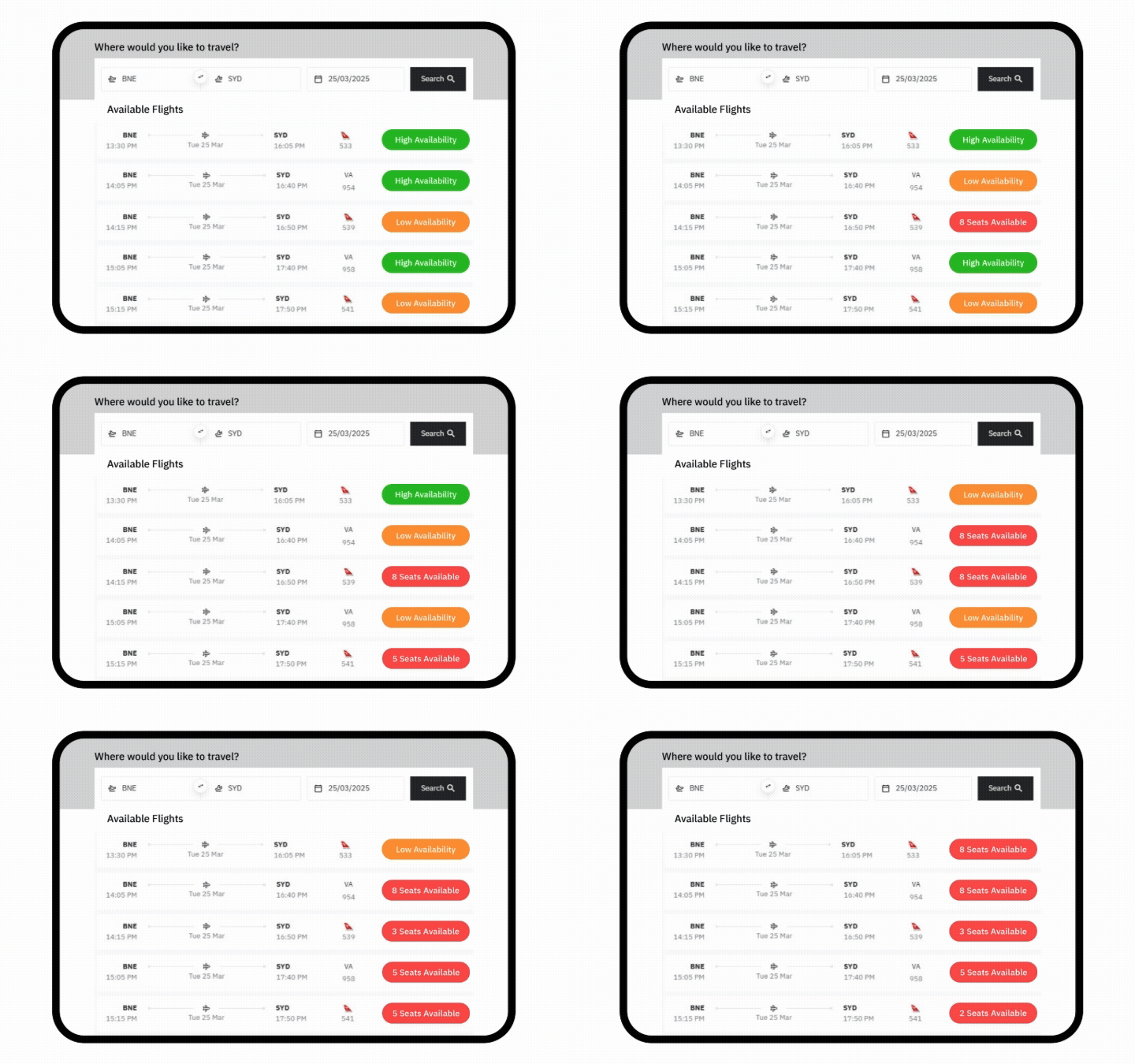
For companies that process high volumes of corporate travel bookings to mobilise entire workforces, smart automation can transform the process. Think roster-aligned bulk bookings, seat visibility, policy-approved flight options, and instant alerts and rebooking when something goes off-plan.
Clever tools can help site admins and travel coordinators save considerable amounts of time, and gives them the visibility they need to secure content that meets their roster and operational requirements,” says Danni. “Booking automation also improves accuracy and safety.
The caveat is though; not all corporate travel software is built for this level of complexity. Choose travel management solutions that support automated bulk bookings, allow for customisation, and can integrate with your existing systems. If it doesn’t flex, it doesn’t fit.
Use data & connections to drive supplier conversations
When you're moving lots of people, your supplier partnerships need to be strong and strategic, not transactional. Danni explains how the secret to negotiating favourable and value-driven supplier deals is data. "Negotiation power comes from data and true partnerships," Danni explains. "The best result comes when you've got both, so you go into supplier talks with facts and finish with outcomes."
Visibility is invaluable in these negotiations.
Take hotel programs, for instance. Proving stable volume at a remote property 365 days out could unlock discounted rates, flexible cancellation terms, or even guaranteed availability during peak periods. For air, data can help you identify commonly used routes and assess whether a route deal or volume-based agreement makes sense.
For some mining, oil, and gas companies, this isn't something they have time or resourcing to handle. That's where a travel management company can step in. Not to take over the process entirely, but to confidently lead and engage the customer and supplier in the process.
FCM often lead supplier talks, then bring clients in to seal the deal,” says Danni. “That middle ground is where you win real value. You’ve got someone guiding the conversation, but it’s still tailored to your priorities.
For more complex programs, particularly those with multiple supplier agreements across different countries, corporate travel consultant teams like FCM Consulting can step in.
Prioritise risk management & crew wellbeing

Operating in remote or high-risk locations means your travel program needs contingency planning. The resource industry is on 24/7, which means travel is too. Danni recalls, “We’ve seen clients forecast costs and crew movements 365 days in advance, but in such a volatile industry we need to be able to respond quickly and decisively when things go wrong, to ensure crew safety and wellbeing.”
Managing corporate travel safety effectively includes integrating traveller tracking, using real-time dashboards, and tapping into third-party risk intelligence providers who monitor everything from security threats and weather disruptions to geopolitical risks.
“Having clear emergency protocols in place and open lines of communication with your travel management company so that plans can be activated rapidly is something that companies should look at, too.” Added Danni.
Beyond risk, crew wellbeing plays a huge role in operational continuity. Fatigue, flight delays, limited downtime, and poor-quality accommodation all contribute to burnout and potential safety risks on-site. One of the most underutilised assets in many programs is the reporting suite through your travel management company.
Companies often have access to powerful duty of care reports, but don’t always understand how to use them, either to proactively support their traveller wellbeing, or what data they need and who to contact when things go wrong. Ensure you connect with your travel partner to proactively prepare". Added Danni.
Don’t try change anything without buy-in
Corporate travel program transformation sounds good on paper, until you try implementing it without stakeholder or user support.
“When working with one customer, we re-anchored around the why,” says Danni. “It helped us align a new process to the overall business goals and bring people on the journey.”
Change without context leads to resistance, especially in complex programs. Travel bookers feel sidelined. Travellers don't trust new tools. And before long, your new system gathers dust.
That's why it generally takes a structured change management plan that includes stakeholder mapping, success metrics, go-live plans, and communication strategies that resonate with the most impacted people.
Danni recalled one instance where a program overhaul was nearly derailed by resistance.
“The travellers didn’t understand why things were changing, and the bookers felt like they’d lost control,” she explains. “After engaging FCM, we identified these factors, and worked with the client to revise the design, brought those users into the redesign, and shifted the language. Suddenly, we had champions instead of blockers.”
Keep sustainability in the back of your mind

Resource companies don’t always win the sustainability contest. However, the industry is under pressure to show real progress, and your travel program can be a valuable lever in that conversation.
“Many of our clients have a 2050 net-zero strategy,” Danni shares. “We've helped them set up strong carbon reporting and visibility in their decision-making.”
By embedding emissions visibility into your online booking process, users can see the environmental impact of their choices before hitting 'book'.
And because stopping travel isn't a reality for companies in this industry, carbon offsetting, optimised routing, consolidating itineraries, or shifting suppliers to those with stronger sustainability credentials can also help reduce the environmental footprint.
The key is visibility. If you can't measure it, you can't improve it. And travel, while not the biggest emissions category for some, can be an area of opportunity.
You might also like...


