
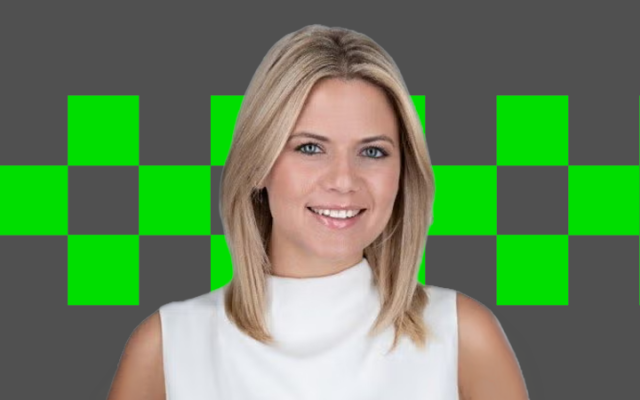
Spotlight: Jessica Dunderdale on building the future of corporate travel technology
Corporate travel technology has a trust problem. Companies invest in new platforms, roll them out with fanfare, then watch adoption stall, as travellers quietly revert to old habits, workarounds, or a phone call to their usual agent.
Together with recently appointed Chief Product Officer Mark McSpadden, Jessica Dunderdale, FCM's Global Head of Product, focuses on how FCM’s own technology closes that gap.
This spotlight looks at how the product team is reshaping the booking experience with Sam, FCM's AI assistant, why FCM chose a proprietary-first technology strategy, and what's next on a roadmap built around one question: does this make corporate travel easier for the person booking it?
Key Takeaways
- FCM's product team is building a connected booking ecosystem anchored by FCM intelligence and Sam, FCM's AI travel assistant, as well as our people’s expertise.
- FCM’s roadmap spans conversational booking across Microsoft Teams, Slack and WhatsApp; a proprietary-first technology platform; and multi-mode reporting that turns raw travel data into action.
- The result: 90% traveller adoption, a four-minute average booking time, and 300 product enhancements in 2026 alone.
Contents
- A strategic, partnership approach to tech development
- What’s ahead for FCM’s roadmap?
- Focus on a proprietary-first technology platform
- What has FCM recently built for travel arrangers?
- What's next on FCM's corporate travel technology roadmap?
- What matters to travel program owners right now?
- Frequently asked questions about FCM's technology
A strategic, partnership approach to tech development
A self-confessed data geek, Jess spent close to 10 years in the accommodation industry before joining FCM, working predominantly across sales and client partnerships rather than technical product roles.
That's a deliberate contrast to the profiles typically found in similar product leadership positions. It’s a strategic decision to really tie all the different aspects of technology together – our customers, prospects, and internal teams.
One part of Jess’ role looks outward, understanding what customers and prospects actually need from a travel program. This is sourced from on-going product feedback, client events and technology pilots. The other looks inward, translating that understanding into product decisions that FCM's broader teams can build against.
It's this dual vantage point, grounded in client relationships, that shapes her conviction that technology only earns its keep when it reduces friction for every persona in the program. It’s not just the traveller, but also the arrangers, and the managers.
FCM's enhancement pace tells its own story: over 300 product enhancements shipped in 2026, compared to roughly 200 reported by Amex GBT over the same period. Add a 17% increase in customer satisfaction and 96.4% global SLA adherence, and the pattern is consistent. Ship fast, measure constantly, and keep the roadmap pointed at the people actually doing the booking.
What’s ahead for FCM’s roadmap?
Sam is FCM's AI assistant, feeding from FCM’s intelligence which includes profiles, travel policy and previous trip bookings. Travellers and arrangers will soon be able to ask Sam for hotel and air bookings in native language in FCM desktop and mobile app, and that capability is extending into the platforms people already work in: Microsoft Teams first, with Slack and WhatsApp following through 2027.
"This is the most exciting part of our roadmap. We have an objective at FCM to meet travellers where they are, and make their lives easier," says Jess. "Travellers and bookers can book through other channels now, as we’d envision a large proportion of travellers won’t go into an OBT environment anymore. But that doesn’t make online booking tools (OBTs) like FCM Booking obsolete. The OBT is still the engine behind that conversational booking flow, and it's also still going to be a place that many people want to go."
Multiple entry points give travellers and arrangers choice. Sam acts as the conversational front door for those who would rather type a request than navigate an OBT. For tasks not suited to AI, or if you just want to talk to a person, our expert travel consultants have access to the same rich detail that Sam does, and get all the chat and context history to seamlessly pick up the enquiry.
The numbers back the approach
Consumer-grade hotel booking has brought the average booking time down to four minutes, with 91% adoption and a 100% hotel attachment rate. Sam's recommendation engine, built on traveller profiles and past booking behaviour, means 77% of flight bookings now come from the top 10 search results.
A recent pulse check on Sam returned a 97% thumbs-up rating, meaning travellers are trusting the answers it’s providing. Travel-related tasks, like checking a visa requirement, now take 2.8 minutes on average instead of seven; that's 2.4 times faster, with 24/7 support available regardless of time zone. Think of the time that’s saving both your and FCM’s teams, so they can focus on their day-to-day role, and complex travel enquiries.
Recently at Business Travel Show Americas, we also launched Sam for browser – a taste of Sam’s capabilities at the search and expense parts of a journey.
Focus on a proprietary-first technology platform
FCM's product strategy is built on owning its core technology, and that choice is becoming more pointed as the market consolidates. Travel industry consolidation means more organizations are being funnelled into solutions that are rigid and not fit for every program. FCM's answer runs the opposite direction: invest in technology and intelligence it controls outright.
You see that control in practice. Every transaction and datapoint stays inside FCM's own systems, so you don't depend on another vendor's release schedule or pricing decisions. Over time, your transaction history and profile data feed richer intelligence into your workflows. Add ongoing product investment, and your travel program gets more connected, and becomes more valuable to your business.
Proprietary-first doesn't mean proprietary only. Customers who have consolidated on Concur or Cytric can keep those tools, with FCM layering one managed intelligence across whichever OBT a team uses. Same policy, same data, same global reporting, regardless of the entry point.
How does multi-mode reporting support better travel decisions?
Different stakeholders ask different questions, and Jess' team has built reporting around that reality, rather than forcing every user into a single dashboard. FCM's business travel reporting operates in three modes:
| FCM reporting mode | Dashboard | Proactive monitoring | Dialogue |
| What it does | Governed, self-service metrics on what happened | Flags trends and anomalies before anyone asks | Ask questions in natural language |
| How it’s accessed and used | Visual dashboards in FCM Platform to determine metrics and analyze | Analysis sent directly to you and your account managers’ email inbox by Proactive Analytics for more collaborative reviews | Connect to your work’s AI tools like Copilot, Claude or Gemini via MCP for conversational analysis |
"I love being able to dive into our data, ask it questions, cross compare, and really feel as though I'm learning from facts and statistics," Jess says of the capability. "It’s a part of our development I'm really excited about."
What has FCM recently built for travel arrangers?
Many of FCM’s features are built with travel arrangers in mind. Recent developments include:
Trip Proposals
With Trip Proposals in FCM Booking, travel arrangers can pull together flight and hotel options in one organized proposal, and share everything with their travellers in a single email.
- Travellers can approve or adjust their choices without logging in
- Pricing can be refreshed instantly
- Once a choice is made, the trip can be booked straight from FCM Booking
Quick Rebook
With 25% of FCM trips booked by an arranger and two thirds of those for a previously booked route, this was ripe for automation.
Arrangers can clone an already booked flight for a different traveller, with the same fare, the right cabin and the right policy, without repeating the full search. It takes that process down to 15 seconds, and as it’s been booked before, it’s already policy compliant.
Altogether, we’re cutting 75% off rebooking time for arrangers, a direct measure of how much manual admin FCM’s technology and team now absorbs.
What's next on FCM's corporate travel technology roadmap?
Conversational booking with Sam's smart recommendations continues to roll out to customers before the end of 2026. This is alongside a new version of FCM Booking's mobile app offering native flight, hotel, and rail booking in one place, with Sam available in there too.
Multi-passenger flight bookings and enhanced multi-passenger hotel bookings follow early 2027. There’s also deeper integration planned with FCM Meetings & Events’ products, such as integrated event management. This gives event organizers the ability to build events, set policy and payments, and send invites directly from the platform.
Geographic expansion continues through 2027, with FCM Booking available in 90% of its top locations by May. Content is widening too, with European rail, cross-border bookings, and air and rail hybrid searching joining FCM Booking, alongside more ground transportation integrations.
What matters to travel program owners right now?
For travel managers assessing their program, Jess stressed that the signal worth watching is adoption, not only feature lists. Technology only generates value only when travellers choose to use it over a workaround.
Our own figures for online booking tool FCM Booking put that strategy to the test, seeing 91% traveller adoption and a 17% customer satisfaction increase.
If you want to embrace the future of corporate travel technology, book a demo with our team today.
Frequently asked questions about FCM's technology
-
What is Sam, FCM's AI travel assistant?
Sam is FCM's proprietary AI assistant designed for travellers and travel arrangers, that enables conversational flight and hotel booking in natural language. Travellers and arrangers will soon be able to ask Sam for hotel and air bookings in native language in FCM desktop and mobile app, and that capability is extending into the platforms people already work in: Microsoft Teams first, with Slack and WhatsApp following through 2027. -
How long has FCM been developing Sam?
FCM has invested in Sam's development for six years, making the current conversational booking capability a natural progression of long-term investment rather than a recent addition. -
Why does FCM integrate with Concur and Cytric instead of requiring customers to switch?
Travellers and bookers get the best experience from FCM when our technology is used harmoniously with our travel consultants and account managers. A single, FCM-managed intelligence layer sits across our technology, so customers get consistent policy, data, and processes across multiple countries.Due to the complexity of programs or previous consolidation projects, some organizations already have an online booking tool like Concur and Cytric. FCM can also integrate these tools with its wider product offering and intelligence.
-
What are the main adoption results FCM has reported?
In its FCM Booking tool, FCM reports 91% traveller adoption, a four-minute average booking time across markets, a 100% hotel attachment rate, and 77% of flight bookings coming from the platform's top ten search results. Arrangers have seen rebooking times fall by 75%.With Sam, daily conversations are up 30% in September 2026 since the launch in June 2026, with the thumbs up rate for responses increasing 88% to 97% in the same period.
-
Who is FCM's travel technology built for besides the traveller?
Our product team builds specifically for three personas: travellers, who get the most visible features like conversational booking; arrangers, who get tools like Trip Proposals, multi-passenger bookings, and Quick Rebook; and managers, who get MCP-powered data analytics, custom messaging controls, and customization features that shape how content and their policy is surfaced to travellers.