Case study: Hotel program consolidation for this government agency
Company overview
This long-standing government client operates within New Zealand's health sector and plays a vital role in supporting essential services across the country. With the majority of their people travelling domestically, the client's corporate travel program needs are ongoing, operational, and essential to their overall mission.

The challenge
The organisation previously booked their accommodation directly with providers, outside of FCM Travel. This decentralised model caused challenges with:
- Minimal visibility of hotel spend and booking behaviour
- No consolidated reporting or benchmarking ability
- Policy controls that were limited to air and car travel only
- Inability to locate travellers accommodation arrangements impacting duty of care
- Extra workload for travel arrangers and accounts payable
- Fragmented itineraries with no single source of truth or point of contact
Without a centralised view of hotel bookings and access to FCM’s global buying power, the organisation struggled to spot areas for improvement and save costs where possible.
Our approach
Recognising the growing need for a more cohesive approach, our account manager worked with the client to explore the value of consolidating accommodation into their existing FCM Travel booking flow.
This conversation didn't happen overnight, though. During regular insight meetings, the FCM Account Manager identified the ongoing gaps and kept the topic front of mind. Consolidation would become an enabler of improved reporting, compliance, and overall experience across the entire travel journey.
Together, with the client a full implementation process was launched to bring hotel bookings into FCM Travel:
- Discovery workshops to understand preferred hotel suppliers, rates, and policy.
- Uploading negotiated rates and loading policy requirements into FCM's online booking tool.
- Training sessions for travel arrangers, including hands-on workshops and ongoing support.
- A shift in mindset, driven by proactive education, regular reporting, and in-person guidance.
- The need to engage with our suppliers to ensure we are bringing them along the journey.
Opening the door for program optimisation and policy improvements.
Outcomes
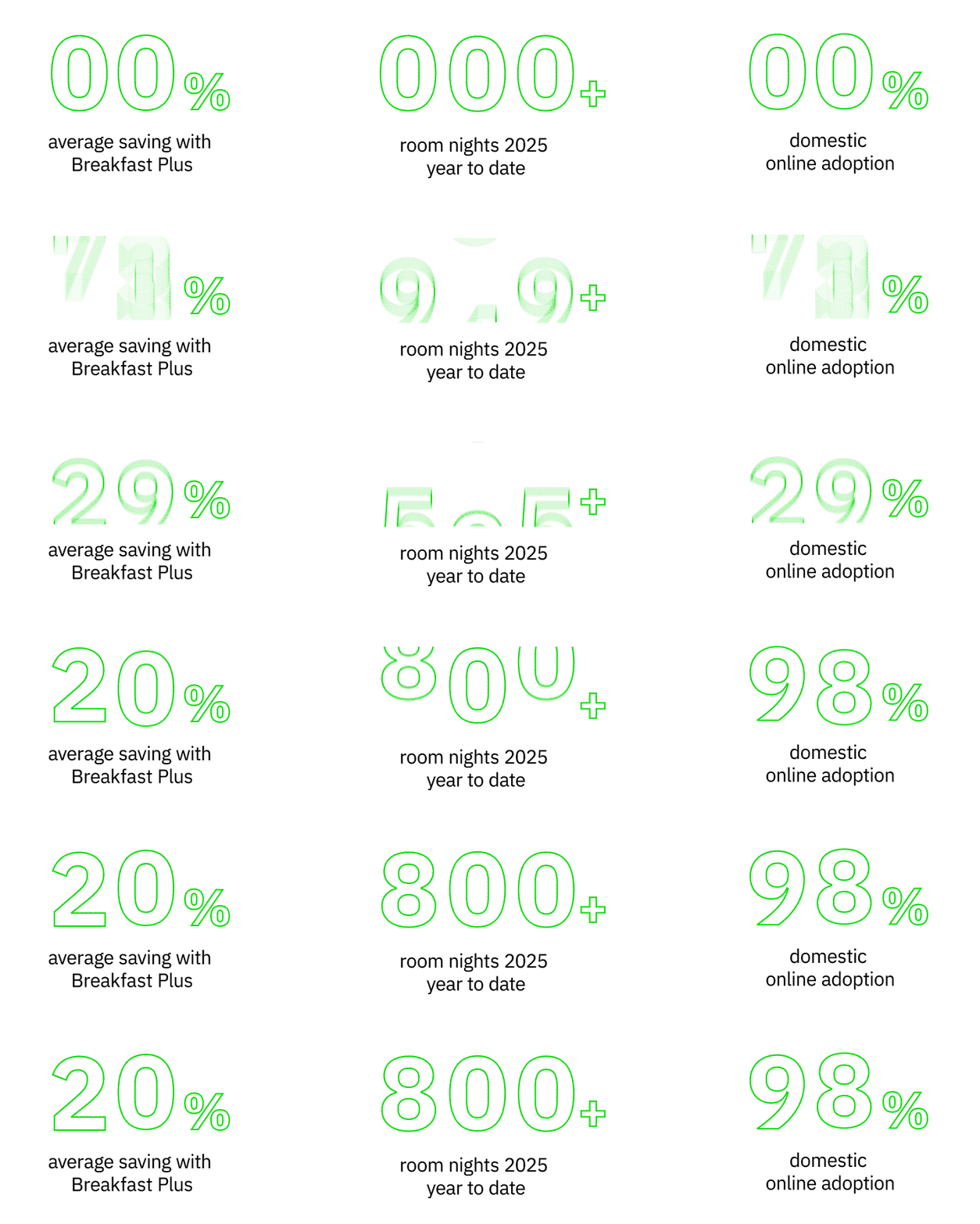
Once the organisation took the plunge and consolidated with FCM, the change was felt almost immediately. Hotels integrated seamlessly into the booking process, and adoption was stronger than anyone expected, with 98% of domestic bookings being made online.
Travel arrangers quickly embraced the shift. Month by month, more hotel bookings moved into FCM Platform, unlocking benefits they couldn’t access before:
- FCM’s exclusive Breakfast Plus rates delivering an average saving of 20% per night.
- A wide range of hotel content in our online booking tool - including Booking.com and Expedia.
- Consolidated reporting now shows actual room nights and spend, helping shape strategy and rate discussions.
- Flight Centre Travel Group and AoG hotel rates offer competitive pricing at non-preferred properties when needed.
- Data and reporting supports duty of care, forecasting and informed decision-making that wasn’t possible before.
- Travel arrangers no longer need to manage hotels and preferences through separate channels.
- Travellers benefit from one itinerary and after-hours support in FCM Mobile.
- Tech features like rate caps and approvals influence and control booking behaviour.
- The finance team now manages a single supplier and consolidated invoicing.

While the consolidation increased spend with FCM on paper, there was a major gain in visibility which was previously missing.
- Accommodation has made up 18% of total travel spend in 2025 so far.
- Which cities top their travel list, and how rates compare to other FCM clients.
- Where to focus hotel strategy, thanks to dashboards, reports, and account manager insights.
- What travellers really think, via FCM’s Voice of the Customer feedback loop for accommodation.
Education, hands-on support, and easy-to-use tech made the transition smooth, even for long-time arrangers who were used to manual processes. The new approach has helped the organisation stay on top of costs, simplify its program, and better support travellers.


