How can you optimize airline sourcing and contracting for corporate travel programs?

Airline sourcing and contracting sits right at the heart of corporate travel programs and is one of the most critical responsibilities for travel program owners. Yet, amid fluctuating travel patterns, evolving supplier dynamics, and constant pressure to deliver measurable savings, managing your air program can feel like navigating a maze blindfolded.
The good news? You don’t have to negotiate in the dark. The smart way to air contracting is here with FCM Consulting’s Air Contracting Intelligence (ACiQ) that moves your airline contracts from a reactive burden into a proactive value driver.
In this guide, we break down how smarter air contracting works today, share actionable strategies to maximize ROI, uncover hidden savings, and decode how ACiQ can show underperforming airline contracts and help you manage your targets with ease for long-term performance.
Why is airline contract management so challenging for travel buyers?
Corporate travel is constantly shifting. Airlines keep adjusting their pricing strategies, capacity, and route networks while your organization's travel patterns change in response to business priorities, hybrid work policies, and economic conditions.
Travel managers are getting caught in the middle. They are expected to deliver cost savings while maintaining traveler satisfaction and airline partnership health simultaneously. On top of that, negotiated contracts are based on projected volumes that may not materialize. The biggest challenge? By the time you've negotiated and implemented a new contract, market conditions and travel patterns may have already shifted, leaving potential value on the table. As a result, you get underperforming contracts and a gap between what’s negotiated and what’s actually delivered.
What are the key components of an effective air sourcing strategy?
An effective air sourcing strategy starts with data-driven clarity. You need visibility into where your travelers are actually flying, which airlines they're choosing, what fare types they're selecting, and how these patterns compare to your contracted agreements.
Your sourcing strategy should address several critical elements:
- Route coverage that matches your actual travel patterns
- Discount structures that align with how your travelers book
- Performance metrics that matter to both your business and airline partners
The most effective strategies balance aggressive savings targets with realistic performance expectations.
Competitive tension remains important, but the goal isn't simply to pit airlines against each other. The focus should be on creating partnerships where both parties have clear visibility into performance and opportunities for mutual benefit.

How can you identify blind spots in your current airline contracts?
Blind spots in airline contracts typically fall into three categories: coverage gaps, pricing misalignments, and performance disconnects.
- Coverage gaps occur when your travelers frequently fly routes or city pairs that aren't included in your negotiated agreements, meaning you're paying full fare when discounts should apply.
- Pricing misalignments happen when the fare classes or booking windows specified in your contracts don't match how your travelers actually purchase tickets. For example, if your contract offers discounts for seven-day advance purchases but most of your bookings are made within three days of departure, you're not capturing the available value.
- Performance disconnects emerge when contract targets don't align with market realities. Perhaps an airline agreed to aggressive volume commitments on routes where they've since reduced capacity, or your business has shifted priorities away from markets where you negotiated the best terms.
The problem with traditional reporting is that it focuses on aggregate spend and basic compliance metrics, and often misses these critical blind spots. You need analytical capabilities with tools like ACiQ that can dissect your program at the route, fare class, and booking pattern levels.
Why shouldn’t you wait to optimize your air program till the next RFP?
One of the biggest myths in air contracting is that optimization happens only during RFPs. Waiting for your next RFP cycle would mean leaving significant value uncaptured...hidden savings opportunities exist right now in your current contracts and travel patterns!
What you can do today:
Mid-term contract amendments: Many contracts can be amended or expanded mid-term. Many airlines are open to adjusting terms, adding route coverage, modifying discount levels, or updating performance targets when presented with data-driven proposals. They prefer enhancing existing agreements over losing share or waiting for the uncertainty of an RFP.
Optimize booking behavior: When you understand which contracted discounts your travelers aren't using and why, you can fine-tune your policy and traveler communications to shift behavior toward better-priced options without sacrificing convenience.
Analyze fare mix: Frequent analysis reveals opportunities. You might discover that a significant portion of your spend occurs in fare classes just outside your contracted discount bands, suggesting negotiations to expand coverage or adjust thresholds that could yield immediate returns.
How do you monitor airline contract health in real-time?
Quarterly reviews and static reports no longer cut it... Real-time performance visibility will help you identify issues while there's still time to address them.
Your key performance indicators should track both sides of the partnership equation. Monitor your performance against volume commitments, route concentration targets, and other obligations to airlines. Simultaneously, track airline performance on pricing competitiveness, schedule reliability, and discount application accuracy.
With real-time monitoring, you can:
- Spot performance gaps early
- Address issues while there’s still time to course-correct
- Have meaningful and data-led conversations with airline partners
The most mature travel programs use performance data to inform ongoing strategy discussions with airline partners. Rather than treating contracts as static documents, they view them as living agreements that evolve based on market conditions and mutual performance.
What role does technology play in airline contract optimization?
Modern airline contracts generate massive amounts of data, far too much to analyze manually and practically. Here, technology is essential for effectively managing modern airline contracts.
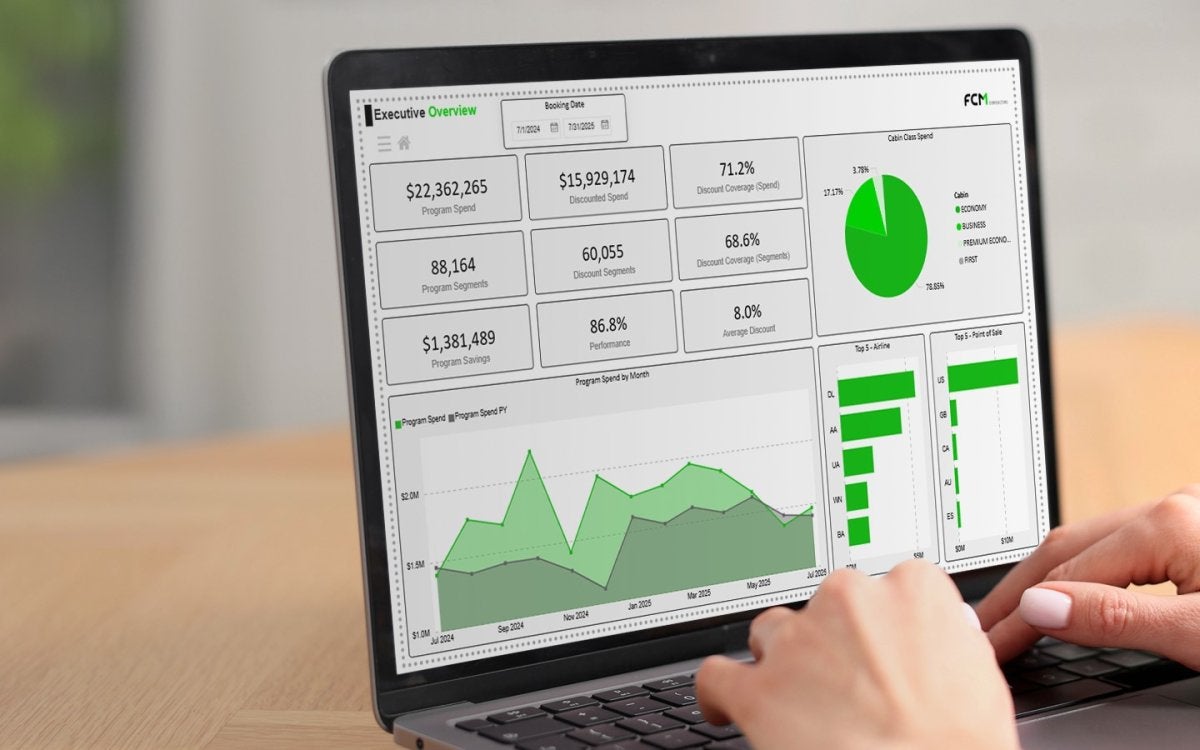
Advanced analytics platforms can process millions of booking records to identify patterns, opportunities, and performance gaps that would otherwise remain hidden. They turn complex contract terms into quantifiable metrics and calculate true savings by comparing actual fares paid against baseline costs.
Instead of drowning in spreadsheets, the correct technology gives answers to:
- Which routes need coverage
- Which airlines offer the best value for particular city pairs
- Where policy adjustments could drive savings
- Which contract terms deserve renegotiation priority
This is exactly where ACiQ comes in.
How can ACiQ transform your approach to airline contract management?
FCM Consulting developed ACiQ specifically to address the challenges travel buyers face in optimizing their air programs. Built in collaboration with air category experts, ACiQ delivers the actionable intelligence you need to maximize contract value and drive measurable savings.
ACiQ goes beyond surface-level reporting and:
- Identifies blind spots by revealing untapped opportunities in travel patterns.
- Analyzes your bookings against contract terms to show exactly where discounts aren't being applied
- Highlights which routes lack coverage, and where traveler behavior doesn't align with contracted benefits.
ACiQ helps source hidden value by pinpointing specific areas in your program where you can extract greater savings before your next RFP.
Real-time contract health and KPI monitoring through ACiQ prepares you for airline reviews with performance data at your fingertips. Instead of guessing, ACiQ provides clear, credible information backed by data.
ACiQ translates complex contracts into trustworthy savings reporting. You'll have confidence in the numbers you present to stakeholders, backed by rigorous analysis of actual discount application and performance against negotiated terms.
What's your next step toward air program optimization?
Don't let another contract cycle pass without maximizing the value available in your air program. The savings opportunities hidden in your current contracts (for example, ancillary fees) and travel patterns represent real dollars that can impact your bottom line today.
Ready to unlock the hidden value in your airline contracts?
Reach out to FCM Consulting to learn more about ACiQ, our air contract intelligence tool. Schedule a demo to see how ACiQ can deliver the actionable insights your program needs to thrive in today's complex travel environment.
Your next savings opportunity is waiting – and with the right intelligence, you'll know exactly where to find it.