
The Bubbling 10 Emerging Markets Report
Fastest-Growing Secondary U.S. Cities for Business Travel
There are a lot of factors affecting when and where business travel occurs. Budgets are under pressure, sociopolitical factors are unavoidable, and airfare, hotel rates, and venue costs have all climbed. And in response to all of these stress points, one question bubbles to the top: Should travel program owners switch up where they conduct their business travel?
Drawing on our tens of thousands of U.S. business trips in 2025 the FCM team identified the cities rising in our bookings – places that are business-travel ready but may not be on every program’s radar – places where travel managers may be able to reallocate their travel expenses to free up critical budget.
The cities in this report don't make headlines the way New York, Chicago, or San Francisco do.
That's precisely the point.
While first-tier markets continue to command premium prices, these 10 emerging destinations - Greensboro, Columbus, Fort Lauderdale, Indianapolis, San Antonio, Tampa, Sacramento, Santa Ana, Salt Lake City, and Hartford – have been quietly closing the gap, building out hotel inventory, expanding airport connectivity, and developing the kind of meeting infrastructure that makes a travel manager's job easier and a finance leader's approval faster. The value is real. The experiences are memorable. And the per-attendee cost of running a great event is meaningfully lower than what most programs have been defaulting to.
The case for exploring non-traditional markets isn't about cutting corners. It's about making smarter decisions with the data available, knowing which cities are growing, where hotel supply is outpacing demand, which airports are adding nonstop routes, and which event calendars create compression risk before you've committed a venue deposit.
A few themes that run consistently across this report are worth keeping in mind as you plan:
- Compression events are the hidden variable. From the High Point Furniture Market in Greensboro to Ohio State football in Columbus, the biggest planning mistake in emerging markets is not knowing the calendar.
- Walkability and infrastructure vary more than you'd expect. Several cities on this list offer strong walkable meeting environments, while others are car-dependent. That distinction shapes attendee experience and per-trip cost.
- The value window doesn't stay open forever. Markets like Columbus, Indianapolis, and Salt Lake City already attract serious convention business and grow their hotel supply accordingly. The cost advantage these cities offer today reflects where they are in their growth trajectory, and not necessarily where they'll be in three to five years.
Our methodology:
FCM ranked these top emerging cities for business travel in 2025 through a detailed analysis of total client flight bookings. The 10 cities in this report experienced the largest YoY growth (from greatest to least) in 2025, for all cities not ranked in the top 20.
1 | Greensboro, North Carolina
Gate city of the South

Population and growth
Greensboro's city population sits at roughly 307,400, with the Greensboro–High Point metro area has an estimated 801,000 residents. The city posted a 27.6% year-over-year travel growth rate (one of the strongest in the Southeast) and holds the highest diversity rate among North Carolina's major cities, with non-white residents making up 60% of the population.
What’s the weather like?
Four distinct seasons, mild overall. Q2 and Q3 are the sweet spot for corporate travel: comfortable weather, manageable crowds, and no major demand events competing for hotel inventory.
Why does it work for business travel?
Greensboro is a serious economic player that doesn't always get the credit it deserves. North Carolina ranked #1 in CNBC's 2025 America's Top States for Business, three times in four years. Greensboro is a direct beneficiary of that momentum.
Healthcare, manufacturing, and logistics anchor the economy, with major employers including Cone Health, Volvo, Qorvo, and TE Connectivity. North Carolina A&T State University and UNC Greensboro add a strong talent and research layer to the market.
The location is quietly one of its best features. Greensboro sits at the intersection of I-40 and I-85, giving it strong regional connectivity to major East Coast population centers.
The cost of doing business is low relative to comparable Southeastern markets, and the numbers back it up: the Greensboro metro saw $4.74B in capital investment and 15,000 new jobs announced in a single year.
Places to stay
Business-class inventory is solid, concentrated near Piedmont Triad International Airport and downtown. The Greensboro-High Point Marriott Airport anchors the airport cluster with a well-regarded property on 17 scenic acres, featuring indoor/outdoor pools, a running trail, and a 24-hour shuttle. Embassy Suites by Hilton Greensboro Airport and Residence Inn by Marriott Greensboro Airport round out reliable options for multi-night stays.
For executive groups or incentive programs, the Grandover Resort & Spa (Wyndham Grand) is the premium option. The Koury Convention Center (the largest hotel and convention center between Atlanta and Washington, D.C.) handles the heavy lifting for large-group meetings and conferences.
Getting there and getting around
Piedmont Triad International Airport (GSO) is nine miles from downtown. American Airlines runs the strongest schedule here, with Delta and United also serving the market. For broader nonstop connectivity, Charlotte Douglas (CLT) is a 90-minute drive and opens up significantly more routing options.
On the ground: rent a car. Greensboro is car-dependent for most business purposes. 82.5% of commuters drive. Downtown itself is walkable for short meetings or dinners, but anything beyond that requires a vehicle.
Events to plan around
The one date that shapes everything else in this market: High Point Furniture Market, held every April and October, 15 minutes away. It's the world's largest home furnishings trade show: 70,000–80,000 attendees and 2,000+ exhibitors. Hotels across the entire Triad go from available to sold out almost overnight when registration opens, along with rate spikes.
The planning rule here is simple: either book well ahead of the market dates, or move your event off those windows entirely.
2 | Columbus, Ohio
The Discovery City

Population and growth
Columbus is the fastest-growing major city in Ohio. It is tracking toward one million residents before the decade ends, a milestone no other Ohio city is anywhere close to hitting. Current city population is approximately 938,400, with a metro area of 2.24 million. Columbus posted 18.4% booking growth in 2025, so programs that establish a footprint here now will be ahead of the curve.
What's the weather like?
Summers are warm and humid, with July highs around 83°F; winters are cold, with moderate snowfall, and January lows near 21°F. Spring and fall are the most reliable travel windows. One operational note: late Q1 can see ice and snow events that disrupt ground travel - build buffer time into February and early March itineraries if attendance is critical.
Why it works for business travel
Ohio's state capital is quietly one of the most economically well-rounded cities in the Midwest. Nationwide Insurance, JPMorgan Chase, Cardinal Health, and L Brands anchor a finance, healthcare, retail, and tech base that sustains consistent multi-sector business travel demand year-round. The Ohio State University (one of the largest in the country) feeds a continuous pipeline of talent that has made Columbus increasingly attractive for corporate relocations and expansions.
According to Columbus economic development officials, Columbus is within a one-day drive of 60% of the U.S. and Canadian population. For programs that draw attendees from across the Midwest and Northeast, geography is a genuine asset.
Places to stay
The Greater Columbus Convention Center anchors the downtown meeting district, flanked by the Hilton Columbus Downtown, Hyatt Regency Columbus, and Sheraton Grand Columbus as natural headquarters hotels. The Short North Arts District, a walkable, character-rich neighborhood immediately north of downtown, adds boutique and lifestyle options that give attendees something to do beyond the conference campus. Hotel LeVeque (Autograph Collection) and Le Méridien Columbus (the Joseph) serve the premium end of the market.
Getting there and getting around
John Glenn Columbus International Airport (CMH) is 10 miles east of downtown. It set a new passenger record of 9.36 million in 2025 and currently offers 52 nonstop destinations, a number that continues to grow. Southwest leads the domestic schedule; American, Delta, and United all provide solid secondary coverage. A major terminal expansion project (CMH Next) is underway, signaling continued infrastructure investment.
Downtown and the Short North are genuinely walkable, a real advantage for attendees whose program is centered in that corridor. COTA provides frequent bus service throughout the region, and rideshares are plentiful from CMH. A car is worth arranging for any meetings outside the downtown core.
Events to plan around
One event dominates the Columbus demand calendar above all others: Ohio State football, running August through November. Home game weekends are not minor inconveniences - rates routinely triple, availability at quality downtown properties disappears months in advance, and the city's entire hospitality infrastructure is operating at or beyond capacity.
The cleanest windows for corporate programs: Q4 outside of football season (late November through December) and Q1-Q2 offer the most predictable availability and competitive rates.
3 | Fort Lauderdale, Florida
Venice of America

Population and growth
Fort Lauderdale's city population is approximately 190,000, but the market you're actually buying into is much larger. Greater Fort Lauderdale (Broward County) covers nearly 1.97 million people, and the broader South Florida metro (the 8th-largest in the U.S.) adds another 6 million within reach. In 2025, the city saw a 14.8% growth in business travel bookings.
What’s the weather like?
Tropical year-round, with two clearly defined windows for corporate travel planning. November through April is your target: warm, dry, and genuinely pleasant. May through October brings heat, humidity, heavy afternoon thunderstorms, and hurricane season. If you're planning outdoor events or attendee experiences around the beach or waterways, keep the calendar firmly in the winter peak season.
Why does it work for business travel?
Fort Lauderdale earns its "Venice of America" nickname: 300+ miles of navigable waterways, a world-class marina network, and an outsized marine manufacturing industry that has made it the undisputed yachting capital of the world. Port Everglades is one of the world's busiest cruise ports and a major trade hub connecting the U.S. to Latin America and the Caribbean.
Key employers include AutoNation, Cloud Software Group (formerly Citrix), and Spirit Airlines, and Florida's no-state-income-tax environment continues to pull corporate headquarters south.
The newly expanded Broward County Convention Center adds 600,000 sq. ft of meeting space to a market that was already drawing serious convention business. Paired with FLL's cost advantage and hotel density, the infrastructure case here is strong.
Places to stay
With 38,000+ lodging options across Greater Fort Lauderdale, availability is rarely the issue, but quality and proximity matter. For groups anchored to the convention center, top picks include the Diplomat Beach Resort, W Fort Lauderdale, Pier Sixty-Six (recently renovated), and the Marriott Harbor Beach Resort & Spa. The convention center expansion has triggered new hotel development in the immediate area, so inventory will continue to grow.
Getting there and getting around
FLL is one of the most logistically convenient airports in the country for a corporate meeting destination. Five minutes from the convention center, 15 minutes from downtown, and consistently priced about 25% below the national average for airfare. Southwest Airlines and United lead the carrier lineup; Delta dominates Terminal 2. For broader international connectivity, Miami International (MIA) is 30 miles south.
On the ground, it depends on your agenda. The downtown core and beachfront are modestly walkable, and the water taxi network along the Intracoastal Waterway is a genuinely differentiated way to move attendees between hotels, restaurants, and evening venues. For anything beyond that corridor, a rental car is the practical call.
Events to plan around
One event dominates the calendar here: the Fort Lauderdale International Boat Show, held in late October or early November. It's the largest boat show in the world: 100,000+ attendees, significant media presence, and an impact that extends well beyond the marine industry. Hotel rates surge across the entire South Florida market during this window, not just in Fort Lauderdale.
If your program has any flexibility on dates, avoid this window unless you're in the marine industry and this event is your program.
4 | Indianapolis, Indiana
The Crossroads of America

Population and growth
Indianapolis is the 16th-largest city in the U.S., with a city population of approximately 895,400 and a metro area of 1.93 million. It's one of the fastest-growing major cities in the Midwest, and corporate travel is reflecting that momentum sharply, with enough year-over-year growth (10.9%) to land on this list.
What's the weather like?
Summers are warm and humid, with July highs around 84°F; winters are cold, with moderate snowfall, and January lows near 20°F. Fall is the most reliably comfortable travel window. Spring can bring severe weather (tornado watches are not uncommon in April and May), so build contingency into outdoor programming during that season.
Why it works for business travel
Indianapolis has spent decades quietly building one of the most meeting-ready cities in the country, and it shows. The Indiana Convention Center is one of the top 15 largest in the U.S., connected by climate-controlled skywalks to more than 4,700 hotel rooms. A fully enclosed campus makes weather irrelevant to your attendee experience.
The economy anchoring all this is more diverse than its motor sports reputation suggests. Eli Lilly, Salesforce, Cummins, and Simon Property Group are among the major employers, with healthcare, life sciences, advanced manufacturing, and logistics all contributing meaningfully. The tech sector is growing fast, and corporate relocations signal that the city's momentum is drawing real investment.
Operating costs are competitive by any Midwest standard, and significantly more favorable than gateway cities. For programs where cost-per-attendee is a primary variable, Indianapolis consistently delivers.
Places to stay
The skywalk-connected convention campus is the defining feature of this market, and it genuinely changes the group travel calculus. The JW Marriott Indianapolis (the largest JW Marriott in the world) anchors the campus as the natural headquarters for large events. The Hyatt Regency Indianapolis, Conrad Indianapolis, and Sheraton Indianapolis City Centre provide strong alternatives within the same walkable network. For groups that want to keep every element of their program under one roof (or one skywalk) Indianapolis is hard to beat.
Getting there and getting around
Indianapolis International Airport (IND) is eight miles from downtown — a clean, efficient run. IND has won the J.D. Power #1 airport customer satisfaction award eight times and set a new passenger record of 10.6 million in 2025, adding 22 new flights in a single year, including a first-ever transatlantic nonstop to Dublin on Aer Lingus. Southwest and American lead the domestic schedule. The airport's trajectory (55 nonstop destinations by mid-2026) means connectivity is improving year over year.
The convention campus is walkable by design; beyond it, the city is car-dependent. Rideshares from IND to downtown are straightforward and plentiful.
Events to plan around
- Indianapolis 500, Memorial Day weekend in May. One of the largest single-day sporting events in the world. The city books solid weeks in advance, and rates reflect it. If your program lands anywhere near this window, treat hotel procurement as an emergency item.
- Gen Con, August: one of the world's largest tabletop gaming conventions, drawing 70,000+ attendees to the convention center. Downtown inventory compresses significantly, and it happens fast once registration opens.
- Big Ten Men's Basketball Tournament, March (at Gainbridge Fieldhouse): a shorter compression window but a sharp one, particularly for mid-week programs in the downtown core.
Q4 (October–December) and early Q1 offer the most reliable availability and competitive rates for corporate programs. Indianapolis's event calendar is dense enough that checking it early isn't optional.
5 | San Antonio, Texas
Military City USA

Population and growth
San Antonio is the second-largest city in Texas and one of the 10 most populous in the country, with nearly 1.49 million residents. The metro area reaches 2.53 million. It's been one of the fastest-growing large U.S. cities for over a decade, posting 6.1% booking growth in 2025. This market will reward early attention.
What’s the weather like?
Subtropical, with heat as the defining feature. Snow is rare enough to be a non-event for travel planning purposes. Spring (March-May) and fall (October-November) are the windows to target for outdoor programming and attendee comfort. Summer events are possible, but keep outdoor elements brief and in the morning.
Why does it work for business travel?
Five active military installations (including Joint Base San Antonio, the largest in the U.S.), make defense and government contracting the backbone of the local economy. That creates a steady, concentrated base of corporate travel demand in sectors like cybersecurity, advanced manufacturing, and government services that few other cities on this list can match.
Beyond defense: healthcare (University Health, Methodist Healthcare), energy, and a growing tech presence round out the economy. Texas's no-state-income-tax environment continues to draw corporate relocations and makes the cost-of-event math look favorable for planners.
The River Walk is the X-factor. Restaurants, hotel terraces, dinner cruises, and evening receptions strung along a scenic urban waterway create the kind of attendee experience that gets remembered and talked about. That's a real differentiator from a generic conference hotel campus.
Places to stay
The River Walk is the undisputed center of gravity for the San Antonio hotel market. Hundreds of properties sit within easy walking distance of the Henry B. González Convention Center, giving groups a genuinely walkable meeting-to-dinner experience rare in a city this size. Premier picks include the Grand Hyatt San Antonio River Walk, InterContinental San Antonio Riverwalk, Canopy by Hilton San Antonio Riverwalk, and the Hilton Palacio del Rio. For executive retreats or incentive programs that need resort scale, the JW Marriott San Antonio Hill Country Resort & Spa delivers.
Getting there and getting around
San Antonio International Airport (SAT) is eight miles from downtown, a straightforward run with no major traffic surprises. Southwest Airlines and American Airlines dominate the market and provide solid domestic connectivity across the U.S.
On the ground, the River Walk and downtown core give attendees genuine walkability, a meaningful advantage for groups whose entire program lives in that corridor. Step outside it and you'll need a car. For any meetings or site visits beyond the central district, arrange rentals in advance.
Events to plan around
Fiesta San Antonio is the date that governs everything else in this market. Eleven days every April, 100+ events, city-wide participation, and hotel inventory that disappears months in advance. This isn't a local festival that travelers can easily ignore; it saturates the entire market. Rates spike hard, availability goes fast, and the city's energy is unmistakably elsewhere.
The rule: if your event falls in April, start the hotel conversation at minimum six months out. If you have date flexibility, Q1 or Q2 outside of Fiesta is a significantly cleaner window.
6 | Tampa, Florida
Florida's Urban Coast

Population and growth
Tampa's city population is approximately 413,000, anchoring a metro area of 3.04 million, one that adds 170 net new residents every day. It's a structural growth story that's reshaping the city's hotel supply, corporate infrastructure, and business travel profile in real time. Corporate travel trajectory is pointing up, with bookings increasing 4.5%.
What's the weather like?
Subtropical, with a clear divide between two travel seasons. November through March is the window: warm, dry, average highs around 71°F, and ideal conditions for both indoor conferences and outdoor attendee programming. May through September brings heat, humidity, daily afternoon thunderstorms, and hurricane season. Corporate events can work in summer, but outdoor elements require careful scheduling and contingency planning.
Why it works for business travel
Tampa has quietly become one of the most compelling meeting destinations in the Southeast, and the data is starting to reflect what planners have been noticing on the ground. In January 2025, Tampa Bay ranked #1 among leisure and convention competitors for hotel occupancy, ahead of Orlando, Miami, Fort Lauderdale, Nashville, Austin, and Charlotte. Cvent named it a top meeting destination for the third consecutive year.
The economy driving that demand is genuinely diversified: finance (Raymond James Financial), defense (MacDill Air Force Base), healthcare, logistics, and the tech sector has seen significant growth in recent years, driven by companies relocating to the region and expanding local operations. Water Street Tampa, a $3B+ waterfront redevelopment, is actively reshaping the downtown into a premium corporate environment, with new hotels, restaurants, and office space coming online in phases. This is a city investing heavily in its own future, and the meeting infrastructure directly benefits.
The Tampa Convention Center earned five major industry awards in 2025, including Best Convention Center in the Southeast. With 600,000 sq ft of waterfront event space and scenic bay views from most meeting rooms, it's a venue that does a lot of the atmospheric work for you.
Places to stay
The downtown hotel market is strong and getting stronger. The Convention Center is ringed by walkable rooms across a range of brands and price points, a genuine advantage for groups that want attendees on foot rather than in shuttles. The Westshore Business District adds another 8,000 rooms within close proximity for overflow. Flagship downtown properties include the Tampa Marriott Water Street, Le Méridien Tampa (The Courthouse), Embassy Suites Tampa Downtown Convention Center, Hilton Tampa Downtown, and Hotel Flor Tampa Downtown (Tapestry Collection). Clearwater Beach, 30 minutes west, adds luxury resort options for executive groups or pre/post-conference extensions. Hillsborough County posted a record $1.2B in taxable hotel revenue in fiscal year 2025, the third consecutive year above the billion-dollar mark. Supply is growing, but demand is keeping pace.
Getting there and getting around
Tampa International Airport is five miles from downtown and routinely earns top marks from the travelers using it: USA Today's best large airport and best dining airport in 2025. Southwest, Delta, and American lead the carrier roster. Recent route expansions have added meaningful international connectivity. For a mid-size market, TPA's international reach is notable and worth leveraging for global programs.
On the ground, the Riverwalk corridor gives Tampa something most Florida cities can't offer: genuine downtown walkability. The TECO Line Streetcar connects downtown to Ybor City's entertainment district; water taxis link Riverwalk venues along the waterfront. For anything beyond the downtown core, the metro is car-dependent.
Events to plan around
The Gasparilla Pirate Festival hits in late January to early February - 300,000+ attendees, a city-wide event that saturates downtown hotel inventory and pushes rates significantly. It's Tampa's signature moment.
The second variable is Tampa's recurring role as a mega-event host. The city has hosted the Super Bowl, College Football Playoff National Championship, NHL Stadium Series, and various NCAA championships, and it keeps winning bids. These events don't happen every year, but when they do, the entire market compresses. Check the events calendar as part of your destination evaluation, not as an afterthought.
The practical rule: Q1 is Tampa's peak demand season from both a leisure and convention standpoint. If your dates are flexible and your priority is value, Q2 outside of spring break offers a cleaner, more cost-competitive window.
7 | Sacramento, California
America's Farm-to-Fork Capital

Population and growth
Sacramento's city population stands at approximately 530,000, within a metro area of 2.27 million. Corporate travel volume is growing steadily at 3.9%, driven by a combination of government affairs activity, healthcare sector expansion, and a tech sector that continues to add employers to the region.
What's the weather like?
Summer is hot and dry with July highs around 95°F, almost no rain, and reliably clear skies. Winter brings mild temperatures but notable rainfall, and tule fog is a real operational consideration: the thick ground fog that blankets the Sacramento Valley on winter mornings can delay flights and complicate early-morning transfers.
Why does it work for business travel?
If your program touches government affairs, healthcare policy, regulatory compliance, or public-sector contracting anywhere in California, Sacramento is a must-go destination. The State of California is the region's largest employer, joined by UC Davis Health, Intel, and Apple in the broader economy.
Sacramento has quietly matured into one of California's most livable and business-friendly cities, with a revitalized downtown anchored by Golden 1 Center and a pedestrian mall that connects meeting venues, hotels, and restaurants in a genuinely walkable package.
The financial case is hard to argue with. Hotel rates in Sacramento are significantly lower than comparable San Francisco properties, making it a cost-effective alternative for California-based programs, with direct flight access to the same West Coast talent pool and client base. For companies that have been defaulting to SF for California meetings, Sacramento deserves a serious second look.
And then there's the food. Sacramento pioneered the farm-to-fork movement (sourcing directly from surrounding Sacramento Valley farms), and the dining scene reflects it. For executive dinners, client hospitality, and incentive programming, the culinary experience here is a genuine differentiator.
Places to stay
Downtown Sacramento's business hotel cluster is concentrated around the SAFE Credit Union Convention Center, with 2,000+ rooms within walking distance. The Hyatt Regency Sacramento sits directly adjacent to the convention center and is the natural headquarters hotel for large events. The Kimpton Sawyer Hotel brings a higher-design option for groups that want something less corporate in feel. The Citizen Hotel (Autograph Collection) offers a boutique alternative with strong proximity to the Capitol building, useful when your attendees split time between meetings and lobbying.
Getting there and getting around
Sacramento International Airport (SMF) is 12 miles from downtown, a smooth, traffic-light run by California standards. SMF set a record 13.9 million passengers in 2025 and is actively pursuing its first nonstop European route. Southwest Airlines and Alaska Airlines lead the domestic schedule.
On the ground, downtown Sacramento is one of the more walkable cities on this list. The SacRT light rail connects SMF directly to downtown (a practical and inexpensive option for arriving attendees), and the core meeting district is navigable on foot. Rideshares and scooters cover the gaps, and a car becomes useful once you're moving beyond the downtown/midtown corridor.
Events to plan around
The California legislative calendar is the primary demand driver in this market, and it runs longer than most planners expect. Sessions run January through September, with hotel compression peaking during spring budget season (typically March-June), when lobbyists, agency staff, and government affairs teams converge simultaneously on the city. The State of the State address in early Q1 creates a sharp, short-window compression event for downtown inventory.
If your program has any government affairs component, you're probably already targeting these windows. Just make sure you're booking hotel blocks early! If you're planning a non-government event and want cleaner availability and more competitive rates, Q3 (July-August, post-session) and Q4 are your best bets.
8 | Santa Ana, California
Heart of Orange County

Population and growth
Santa Ana's city population is approximately 316,000, but the market you're working with is Orange County: 3.2 million people, one of the wealthiest and most economically productive counties in the United States. Business travel to the region is growing at 3.3%, supported by a tech and healthcare sector that continues to attract corporate investment and talent from across Southern California.
What's the weather like?
Mediterranean year-round, with some of the most consistently pleasant weather of any market on this list. July averages around 82°F; winter lows hover near 47°F. Santa Ana winds, hot, dry gusts that can move through in fall and winter, occasionally elevating wildfire risk in surrounding areas. It's worth monitoring conditions for outdoor events in those seasons, but it's rarely a disruption to flight schedules or indoor programming.
Why it works for business travel
Orange County's business case is straightforward: you get access to a 3.2 million-person, high-income market with sophisticated corporate infrastructure, at a fraction of the cost and hassle of Los Angeles. For companies with Southern California operations, clients, or partners in tech, biotech, financial services, or advanced manufacturing, Orange County is where the work actually happens, and Santa Ana sits at the center of it.
Major employers include Edwards Lifesciences, Broadcom, and Blizzard Entertainment, alongside a dense cluster of financial services, healthcare, and professional services firms throughout Irvine and Costa Mesa. The proximity to UCI's research commercialization pipeline keeps new companies forming at a steady rate.
The Southern California bonus package is real, too. Fifteen minutes to Disneyland and Anaheim's entertainment district. Twenty minutes to Newport Beach and the Pacific Coast. Thirty-five minutes to downtown Los Angeles. For incentive programs or executive events that benefit from leisure adjacency, the options here are genuinely strong.
Santa Ana does not have a standalone convention center - meeting space is distributed across conference hotels in the area, which limits capacity for larger programs.
Places to stay
Business hotel inventory clusters around John Wayne Airport and the main freeway corridors, exactly where your travelers want to be. Top picks include the Hotel Zessa Orange County Airport (DoubleTree by Hilton, consistently rated among the best airport hotels in California), Embassy Suites by Hilton Santa Ana Orange County Airport, and the Courtyard by Marriott Santa Ana Orange County. Most properties offer complimentary airport shuttle service, which matters given SNA's proximity. South Coast Plaza and Newport Beach add upscale alternatives for executive groups that want a more polished setting.
Getting there and getting around
John Wayne Airport (SNA) is two miles from most Santa Ana hotels. Ranked #1 for large airport customer satisfaction in the J.D. Power 2025 North America Airport Satisfaction Study for the second consecutive year, SNA's compact layout means curb-to-gate in under 15 minutes is achievable. For frequent business travelers, that kind of frictionless experience adds up. American and Southwest lead the carrier roster, with Alaska, Delta, United, Frontier, and several others also serving the market.
For broader routing needs, LAX is 35 miles north, and Long Beach Airport (LGB) is 20 miles northwest. Both are viable alternatives when SNA's nonstop options fall short.
On the ground, a rental car is not optional in Orange County. The region is built around freeway infrastructure, and there is no practical way to conduct business travel here without one. Factor it into your per-traveler cost calculations from the start.
Events to plan around
The permanent demand factor in this market is Disneyland, 15 minutes north in Anaheim. It has multiple peak windows throughout the year that compress hotel inventory across all of Orange County: spring break (late March–mid-April), summer (mid-June through August), and major holidays (Thanksgiving week, Christmas–New Year's).
The practical guidance: if you're planning a large corporate group event, avoid Q3 entirely if your dates have any flexibility. Summer is when the Disneyland effect is at its all time high, and rates across the county reflect it. Q1 (outside of spring break) and Q4 (outside of the holiday window) are your cleanest, most cost-effective booking windows.
9 | Salt Lake City, Utah
Where Mountains Meet the Metropolitan

Population and growth
Salt Lake City's city population sits at approximately 210,000, within a metro area of 1.23 million. Utah is one of the fastest-growing states in the country, fueled by a tech sector expansion that has fundamentally reshaped the regional economy over the past decade. Corporate travel is tracking steady growth year-on-year, with 3% measured in 2025.
What's the weather like?
Four seasons, low humidity throughout. Summers are hot and dry; winters are cold with heavy snowfall in the mountains. The key operational note for travel managers: Salt Lake City International Airport ranks #1 for on-time arrivals and departures in North America. Winter weather that would compress inventory and disrupt itineraries at other mountain-adjacent airports rarely does so here. Spring and fall are the most comfortable travel windows, but SLC is a genuinely all-season destination from a logistics standpoint.
Why does it work for business travel?
The "Silicon Slopes" is a legitimate tech corridor. Adobe, Qualtrics, and Pluralsight are among the anchor employers in a region that has posted some of the strongest tech job growth in the country over the past five years. Finance, healthcare (Intermountain Health, University of Utah Health), and the State of Utah round out a diversified economic base that drives consistent, multi-sector business travel demand.
The 2034 Winter Olympics bid is already catalyzing infrastructure investment across the city. And the incentive travel case is arguably the strongest of any city on this list. World-class skiing at Alta, Snowbird, Park City, and Deer Valley sits 30-45 minutes from the airport. For programs that want to combine serious meeting infrastructure with an exceptional attendee experience, Salt Lake City is almost uniquely positioned to deliver both without compromise.
Places to stay
The convention district is compact, walkable, and well-supplied. The Hyatt Regency Salt Lake City is the purpose-built headquarters hotel: 700 rooms, 60,000 sq ft of meeting space, opened 2022. For groups that want more character, the Grand America Hotel is one of the finest full-service hotels in the Mountain West. Marriott City Creek, Hilton Salt Lake City Center, and the Sheraton Salt Lake City round out a solid mid-tier inventory.
Getting there and getting around
The $5.1B Salt Lake City International Airport is brand new, operationally excellent, and 15 minutes from downtown. Delta Air Lines operates its western hub here, the most comprehensive domestic and international route network available in the Mountain West, including nonstop service to Paris and Amsterdam. American, Southwest, United, Alaska, and several international carriers also serve the market.
Downtown is walkable and well-connected. The TRAX light rail runs directly from the airport to the convention district for $2.50, a simple, reliable option worth communicating to attendees in advance. A car is only necessary if your program extends into the suburbs or includes resort access.
Events to plan around
Historically, the Sundance Film Festival occurred every January in Park City (30 minutes away) and caused the sharpest, fastest hotel demand spike of any event on this list. However, the festival is permanently relocating to Boulder, Colorado, starting with the 2027 event.
The good news is that the rest of the calendar is relatively clean. SLC doesn't have the same density of demand compression events as some of the Florida or Texas markets on this list.
10 | Hartford, Connecticut
Insurance Capital of the World

Population and growth
Hartford's city population is approximately 121,000, anchoring a metro area of 1.03 million. The surrounding suburban workforce is notably affluent and well-educated (one of the highest-income states in the country), and it shows in the professional density of the region. Business travel measured a 1.5% growth in 2025.
What's the weather like?
Classic New England: four seasons, full stop. Summers are warm and humid; winters are cold with moderate snowfall, and January lows near 18°F. The operational flag for travel managers is nor'easters between November and March can and do disrupt flights, sometimes with little notice. Build contingency into Q1 itineraries, particularly for events where attendance is non-negotiable. Spring and fall are the cleanest travel windows and the most reliable for large-group logistics.
Why it works for business travel
This is the global insurance capital. Connecticut ranks #1 in the U.S. for insurance jobs as a percentage of total employment, at 3.4% - nearly three times the national average. Hartford, Aetna, Cigna, and Travelers are all headquartered here or maintain their largest operations in the region. If your client base, prospects, or partners operate in financial services or insurance, the concentration of decision-makers within a short drive of downtown Hartford is unmatched anywhere in the country.
For regional meetings, Hartford's geographic position is quietly efficient - Amtrak connects to New York in under 2 1/2 hours and Boston in under two, making it a genuinely central New England hub without the cost or complexity of either city.
The rate story is also worth stating plainly: Hartford offers some of the most competitive hotel pricing of any city in this report. For programs where cost-per-attendee matters, this market delivers.
Places to stay
The downtown hotel market clusters tightly around the Connecticut Convention Center, an advantage for multi-day conferences. The Hartford Marriott Downtown is the flagship: directly connected to the convention center, 409 rooms, full-service amenities, and a strong track record with corporate groups. The Residence Inn Hartford Downtown and DoubleTree by Hilton Hartford Downtown handle extended-stay and overflow needs reliably. For airport-adjacent options, the Hilton Garden Inn Hartford North/Bradley Int'l Airport is a practical choice for fly-in attendees.
Rates across all these properties are among the most affordable of any market on this list, which matters when you're running the numbers on a multi-day, multi-attendee event.
Getting there and getting around
Bradley International Airport (BDL) sits 15 miles north of downtown, about a 30-minute run. American and Delta are the dominant carriers, connecting well through Charlotte, Philadelphia, Atlanta, and Detroit. The Bradley Flyer bus offers direct service from BDL to downtown Hartford for $1.75, with a dedicated stop at the Connecticut Convention Center. It's a simple, cost-effective option worth flagging to attendees.
Downtown is moderately walkable. The convention center, flagship hotels, and a solid restaurant cluster are all within a reasonable on-foot radius. The CTrail Hartford Line is a legitimate asset: 17 trains per day connect Hartford to New Haven, with onward service to New York and Springfield. For attendees traveling from Boston or New York, the train is often the smarter call than flying.
Beyond downtown: you'll need a car. The suburban Hartford County geography is not pedestrian-friendly, and most corporate campuses outside the city center require a vehicle.
Events to plan around
The insurance industry conference calendar runs heavily through Q1-Q3. If your event isn't insurance-related, you're not necessarily blocked out, but it's worth checking the calendar before finalizing dates.
The second is the Travelers Championship PGA Tour event every June in Cromwell, CT (15 minutes south). It's one of the premier corporate hospitality occasions in New England, drawing senior insurance and financial services executives in significant numbers.
City Summary Data
City | Metro pop. (2025) | Airport code(s) | Hub / dominant airline | Walkability | Car needed? | Top demand event (book early) |
|---|---|---|---|---|---|---|
| Greensboro, NC | ~770K | GSO (CLT backup) | American Airlines | Downtown: High Broader city: Low | Yes | High Point Furniture Market (Apr & Oct) |
| Columbus, OH | ~2.24M | CMH | Southwest / American | Downtown: High Broader city: Low | Recommended | Ohio State football weekends (Sep–Nov) |
| Fort Lauderdale, FL | ~1.97M | FLL (MIA nearby) | Southwest / United | Moderate (downtown + Riverwalk) | Recommended | International Boat Show (Oct/Nov) |
| Indianapolis, IN | ~1.93M | IND | Southwest / American | Downtown campus: Very High Beyond: Low | Recommended | Indianapolis 500 (Memorial Day wknd) |
| San Antonio, TX | ~2.53M | SAT | Southwest / American | River Walk: High Beyond: Low | Yes | Fiesta San Antonio (April, 11 days) |
| Tampa, FL | ~3.04M | TPA (PIE secondary) | Southwest / Delta | Riverwalk: High Beyond: Low | Recommended | Gasparilla Pirate Festival (Jan/Feb) |
| Sacramento, CA | ~2.27M | SMF (SFO ~90 min) | Southwest / Alaska | Downtown: High Beyond: Moderate | Helpful | CA Legislative session (Jan–Sep) |
| Santa Ana, CA | ~3.2M | SNA (LAX / LGB) | American / Southwest | Car-dependent overall | Yes | Disneyland peak seasons (summer/holidays) |
| Salt Lake City, UT | ~1.23M | SLC | Delta Air Lines | Downtown: High Suburbs: Low | Helpful | N/A |
| Hartford, CT | ~1.03M | BDL (PVD / HVN) | American / Delta | Downtown: Moderate Suburbs: Low | Recommended | Travelers Championship PGA (June) |
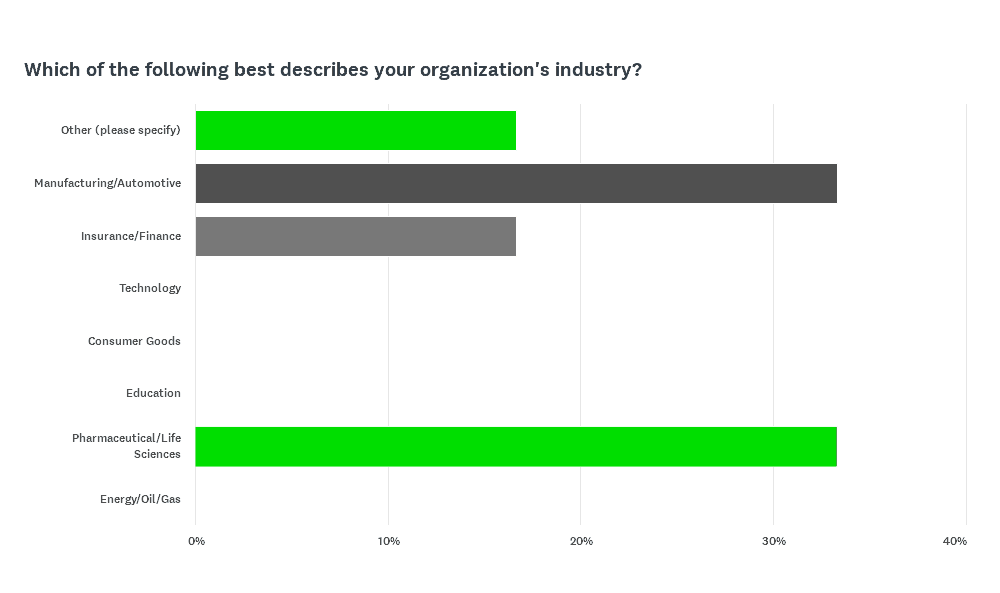
Organization's industry
We asked travel managers what industry their travelers worked for. Pharma/Life Sciences and Manufacturing/Automative were neck-in-neck.
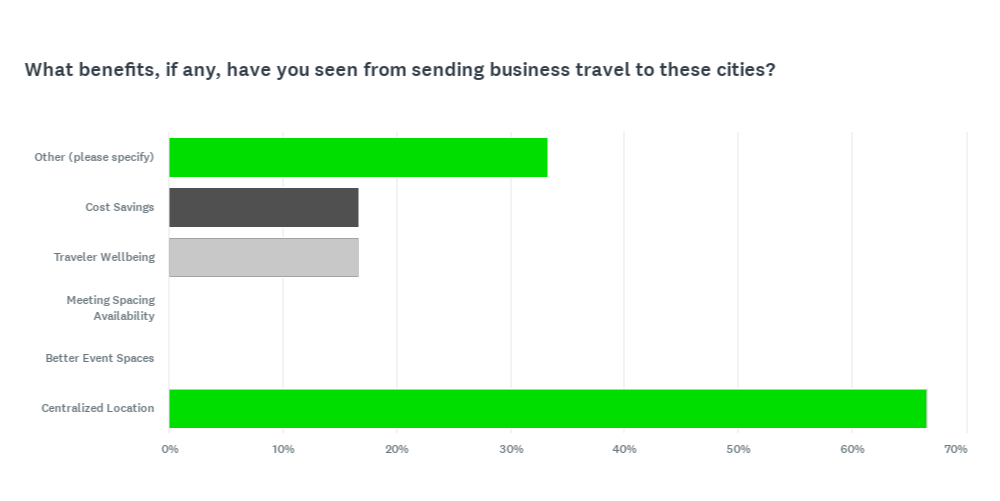
Benefits
We asked travel managers what benefits they were seeing from sending travelers to the Bubbling Ten. A centralized location was far and away the biggest win.
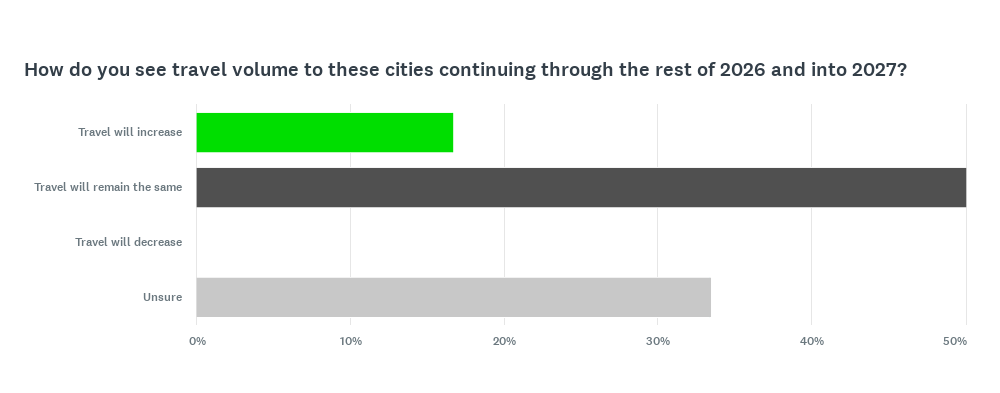
Travel volume
We asked travel managers how their current program volume was trending toward the Bubbling Ten. Looks like most are happy to continue including the Bubbling Ten in their programs.
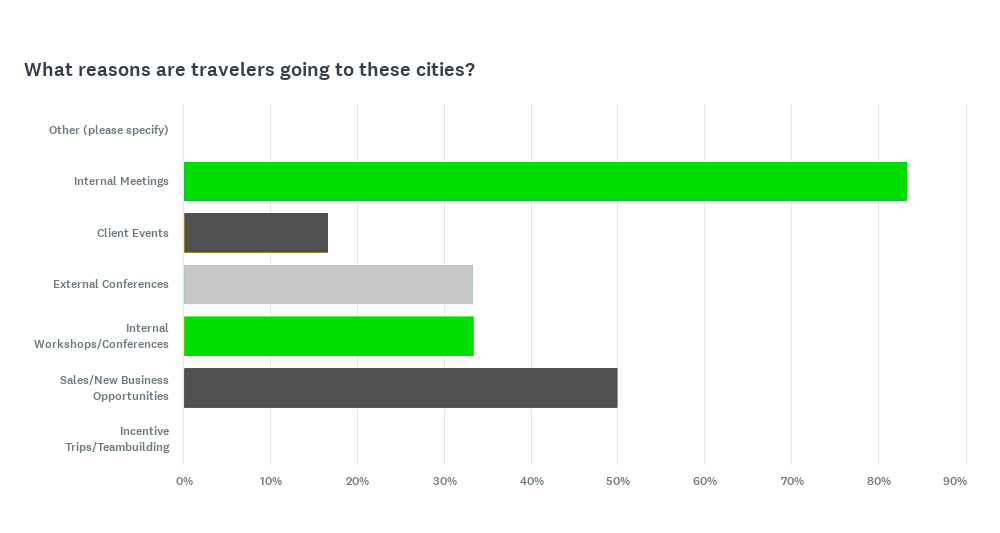
Travel reasons
We asked travel managers what factors were driving trips to the Bubbling Ten. Internal meetings indicate new office openings or onboarding events.
These 10 cities represent a diverse cross-section of the U.S. Travel program owners can use these city profiles to brush up on the essentials: population and climate, key industries and cultural identity, hotel accommodations, airport access and airline options, getting around on the ground, and the major local events you need to factor into your planning calendar before you lock in your schedule.
Is your next business trip or corporate event destined for one of the Bubbling 10?