
CASE STUDY:
How FCM responded to the Middle East airspace crisis
In February 2026, airspaces closed across the Middle East following US military strikes. Thousands of travellers faced disruption and uncertainty.
Within 10 minutes, FCM identified and started to support the travellers that were immediately affected. It kickstarted weeks of on-going support for travellers and travel progamme owners.
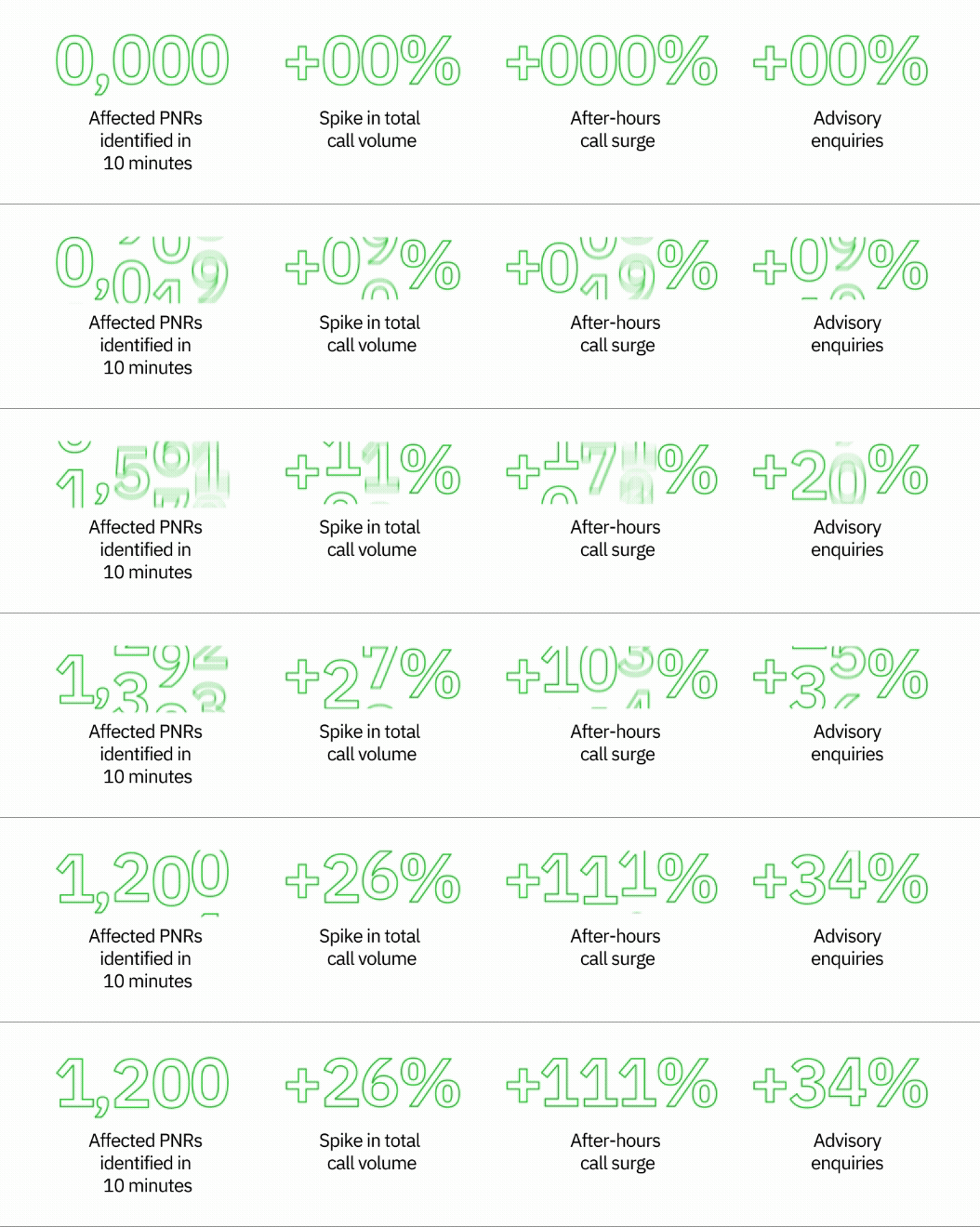
Key Statistics
Key Takeaways
- Proactive travel management is essential in a crisis.
- FCM was prepared for a surge in calls and requests from travellers.
- Reporting was essential in telling the full story, and for on-going strategy.

The situation
On the evening of Saturday, 28 February 2026, US military strikes on Iran triggered airspace closures across the Middle East. Key flight corridors were affected immediately. For corporate travel managers and procurement teams worldwide, the implications meant thousands of travellers faced disruption and uncertainty. Geopolitical disruptions can’t be predicted, yet the impact on your travellers and your programme requires immediate mitigation.
First response: Activating crisis management protocols

Once the news broke, FCM’s crisis protocols were activated. It was approximately 11am in London, 6am in New York, and 8pm in Brisbane.
No manual trawling. No waiting for clients to call. FCM found the risk before most travellers had even opened a news alert.
Within ten minutes: 1,200 affected PNRs were identified, so the team knew of every traveller booked on flights to or through the affected countries between 28 February and 2 March.
Within 30 minutes: FCM Platform and mobile app were updated with real-time guidance, and global client communications had been drafted, ready to deploy.
Within one hour: A global upstaffing plan had been submitted and put into action across every region. This expanded phone and email capacity before a surge started and queues had a chance to build.
On-ground coordination for disruption management and evacuations
While globally our teams prepared for a surge in calls and digital enquiries, the FCM UAE team needed to secure the safety of our team in the region, while initiating crisis strategies for our clients, and responding to enquiries.
All UAE-based team members were immediately transitioned to remote working to ensure their safety, and for operational continuity.
For many clients, evacuation was paramount. The FCM UAE team:
Shaped tailored relocation plans and structured travel logistics support for various clients, including routing options, border crossing possibilities, and accommodation coordination.
Constantly engaged with airlines, charter companies, coach companies and visa processing partners to assist with options.
Worked with our team in Saudi Arabia, the UK, and other neighbouring countries to help with enquiries and traveller movements.
Activated a centralised communication approach to streamline information flow and reduce duplication of requests.
Prepared for the volume surge
Phone enquiries
In the immediate aftermath of the strikes, out-of-hours teams saw call volumes more than double, up 111.6%. The global upstaffing plan meant travellers and travel managers calling in were met with a coordinated response, and our same high customer service standards.
For countries in standard business hours, FCM saw a 13.9% rise in call volumes while maintaining a 97% answer rate. Rehearsed protocols and a client-focused culture drove consistency and quality in this high-pressure situation.
Overall call volumes increased by 26.3% in the week following 28 February, compared to the equivalent prior period.
| Channel | Volume increase | Answer rate maintained |
| Business hours | +13.9% | 97% |
| After hours | +111.6% | Scaled via upstaffing |
| Total (all hours) | +26.3% | 92% |
Email and digital enquiries
Sam triages every enquiry
Sam, FCM’s intelligence engine, automatically sorts enquiries and emails in levels of urgency. This means that travel consultants can deal with those travelling through the Middle East region faster and more efficiently.
Travel changes
Email enquiries increased 9.7% in the immediate short-term, with change and cancellation requests increasing 15%.
Across the week following 28 February, email enquiries increased 8.7%, and change requests were up 14.2%.
These increases were significant but relatively contained given the severity of the geopolitical event. This reflects the effectiveness of FCM’s proactive outreach in reducing reactive, distressed contacts.
Advisory enquiries
As well as those needing immediate travel help, a 34.4% increase in general, more advisory enquiries was seen. This continued to grow 19.8% in the following week.
Travellers and travel managers turned to FCM as trusted counsel during this uncertain period. These calls were looking for expertise and judgement:
- Advice and reassurance
- Clarity on policy implications
- Guidance on what the evolving US-Iran situation meant for their programmes
| Enquiry type | Short-term uplift | Sustained uplift |
| Total enquiry volume | +9.7% | +8.7% |
| Change and cancellation requests | +15.0% | +14.2% |
| General / advisory enquiries | +34.4% | +19.8% |
Reporting told the full story
As the situation evolved, FCM’s reporting capabilities continued to provide clarity. An analysis revealed a further 15,000 PNRs booked who would be affected over the next four weeks.
This represented just 0.8% of FCM’s total PNR volume, an important perspective for clients assessing their own risk exposure.
On-going strategic advisory intel
After the initial crisis response, it was clear that travel managers would need on-going updates about airline status, fare intelligence, and market impact.
FCM Consulting used its extensive knowledge and analysis skills to:
- Release a weekly Middle East Advisory document, with detailed data on flight availability, fuel cost impact, impact on fares, and how the situation has changed. This also included risks and advisory guidance for travel programmes.
- Develop reporting dashboards for free to help customers identify the specific financial impact on their travel programmes.
Travel solutions that made the difference

Technology that works under pressure. The ability to identify affected PNRs within minutes of the crisis breaking reflects the depth of FCM’s data infrastructure.
A global team that moves as one. Despite the 26.3% overall surge in call volumes, our teams maintained answer rates and service quality during business hours, and rapidly scaled after-hours capacity. This was a result of rehearsed protocols, a culture that puts clients first, and a genuinely global operating model.
Proactive communication that reduces reactive pressure. When clients are reached early, informed clearly, and reassured with expertise, the result is a contained level of change and cancellation demand. FCM shifted the dynamic from crisis management to crisis partnership.
What it means for travel programmes
Geopolitical disruptions can’t be predicted. But their impact on your travellers and your programme can be dramatically reduced when your travel management partner has the infrastructure, data capability, and human expertise to act, not just react.
The data tells the real story:
- 26.3% spike in total call volumes, without service degradation during business hours.
- After-hours surge of over 111%, met with scaled global capacity.
- 34.4% increase in advisory enquiries, with clients leaning on FCM as a source of expertise and calm when they needed it most.
- In the UAE, email performance remained stable, with 91% SLA adherence vs a 97% standard.
Stories from the FCM UAE team
Energy client
Close coordination between travel consultants and account management to support the client, not just service. The team was recognised with awards by the clients’ travel team due to their responsiveness, partnership and calm execution.
Engineering firm
While rebooking flights, this client kept a close eye on costs. We reinforced disciplined fare sourcing expectations internally and worked to improve transparency on where cheaper fares were sourced.
Manufacturer
Ensured programme configuration was aligned to disruption-related travel requirements, and consistency across policy intent, booking tool controls and operational execution. Communication was clear in OBTs, and customer programme settings, and kept up to date if no longer reflecting agreed controls.